
Choose the books for a wall by giving each shelf a reason: one story in reading order, one look that repeats across the row, or one idea that ties the books together. A shelf with a reason reads as a set, and a visitor can follow it without being told. The founder's wall holds 44 books on 8 shelves, and every shelf below is one of those three.
Start with how many
A wall shows a small share of a collection, and that is the point. The founder's wall holds 44 of 558 books, about one in 13. Choosing that few forces a decision about every book that goes up, and the decisions are what make a wall worth looking at.
Pick a shelf length and keep it. Six covers to a shelf works well: long enough for a full story, short enough to take in at a glance. An empty slot waiting for the right book is fine.
One story, in reading order
The strongest shelf is a single story, left to right, in the order it was published. Four of the founder's shelves work this way:
- Fatal Attractions, 1993. All six chapters, X-Factor #92 through Excalibur #71, in crossover order. Each chapter had a hologram cover, so the shelf is one story and one look at once.
- The Death of Superman. Six books across four titles, from Superman: The Man of Steel #18 to The Adventures of Superman #505.
- Knightfall. Batman #497, Detective Comics #664, Batman #500 and on to Batman: Legends of the Dark Knight #63.
- Carnage. The Amazing Spider-Man #361 to #363, the whole three-part story on one shelf.
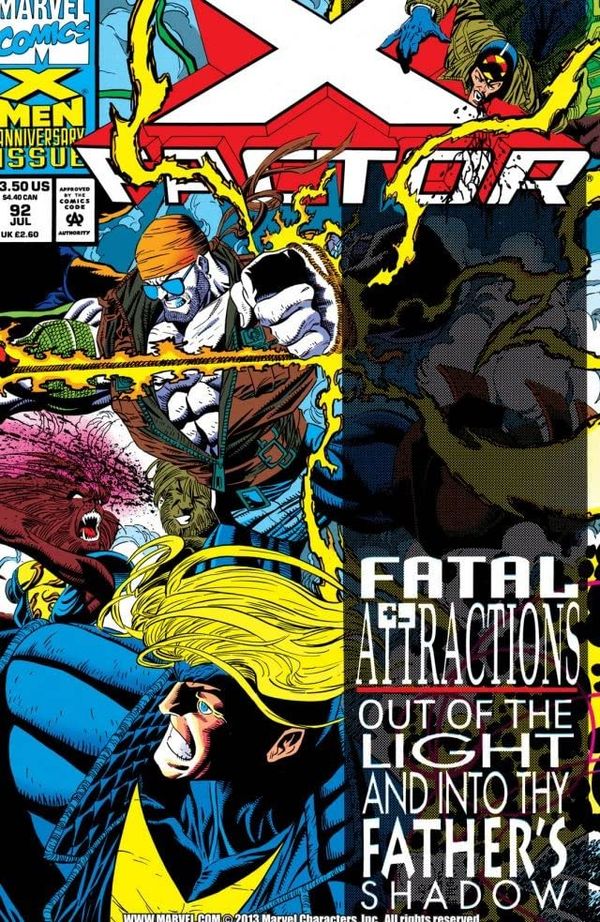
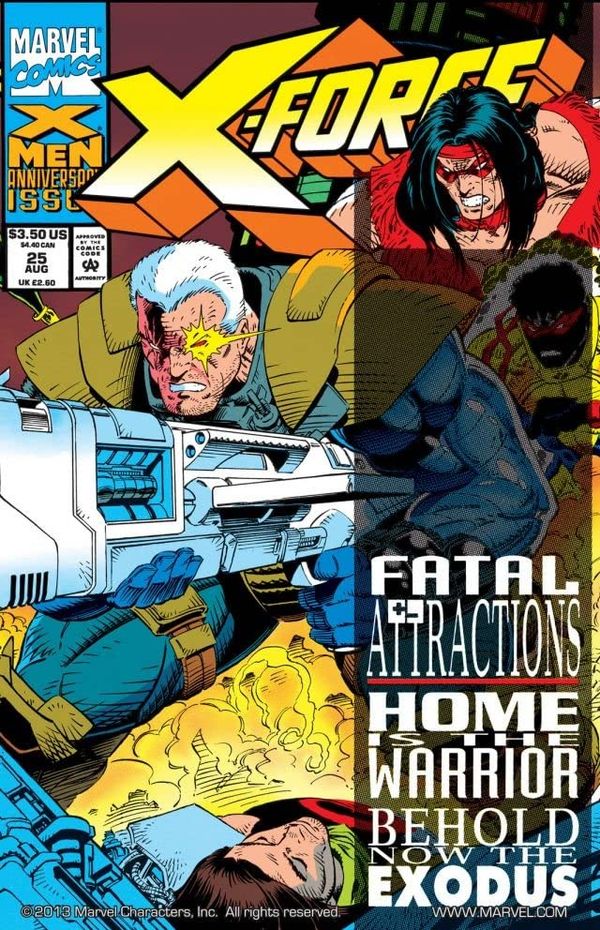
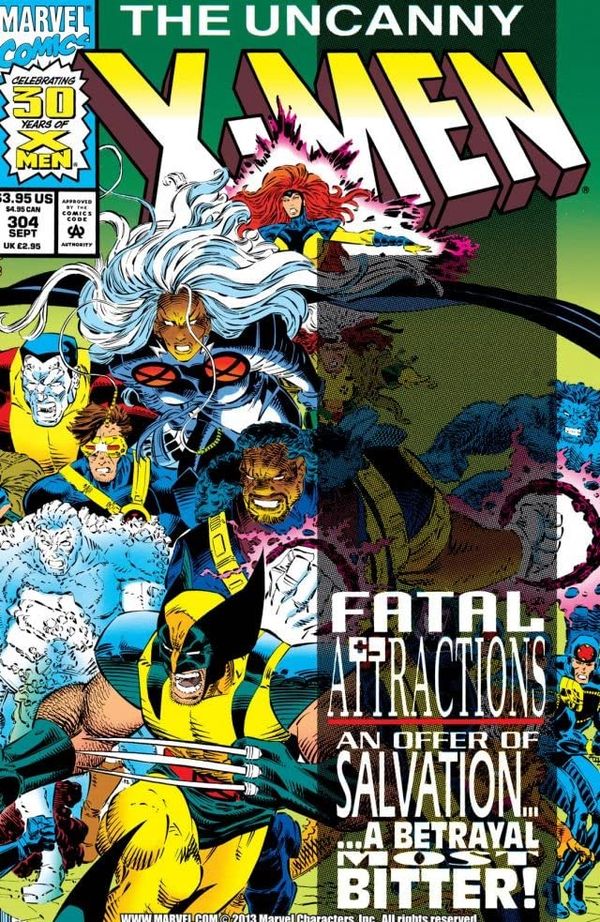
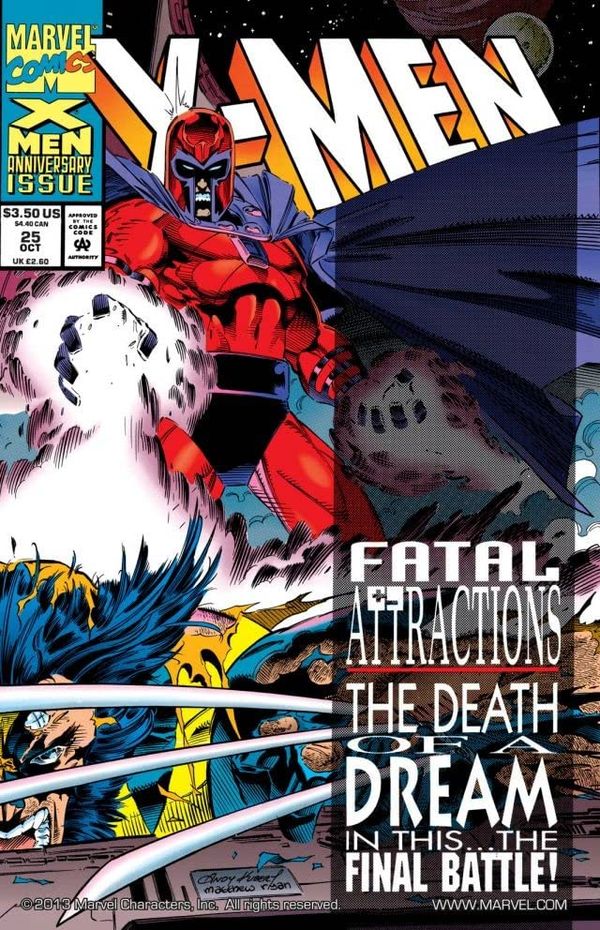
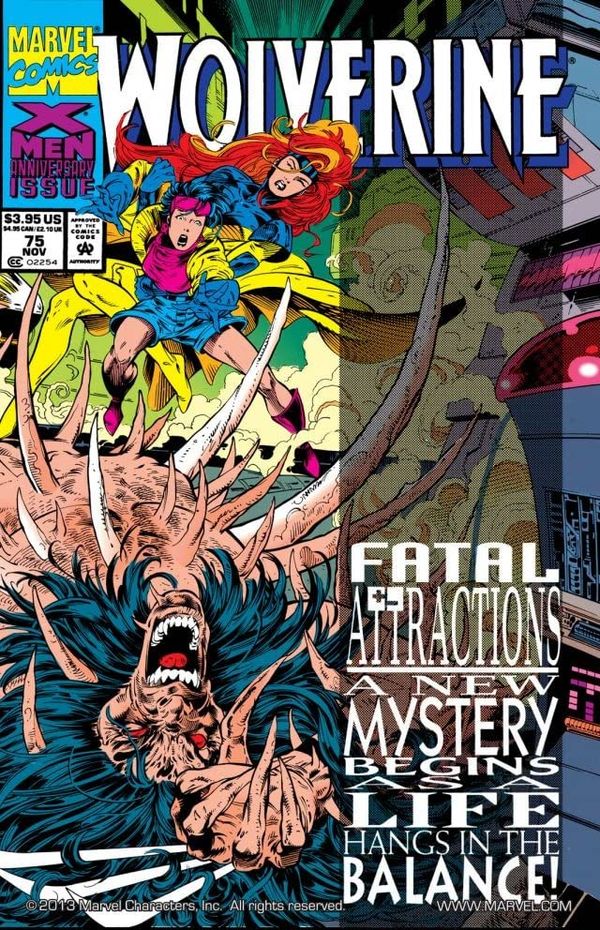

The founder's Fatal Attractions shelf, all six chapters in order.
A story shelf has a second use: it shows the gaps. If you own chapters one, two and four, the empty slots tell you which books to look for, and our guide to trading comic books safely covers how to get them from another collector.
One look
A shelf can also hold together by how the covers look: one artist, one year, one cover treatment. The Fatal Attractions shelf does this by accident of history, since all six covers are holograms. Other ways to build a look:
- One artist. Every cover by the artist who got you into comics.
- One year. Twelve months of a title, or one year across every book you bought.
- One cover style. Holograms, die-cuts, polybags, gatefolds.
A look shelf is the easiest to read from across a room, because the pattern shows before anyone can make out a title.
One idea
The third kind of shelf collects books that share something a visitor learns once they look closer. Two of the founder's shelves work this way.
The first-issues shelf holds six series launches from 1982 to 1992: The New Mutants #1, X-Factor #1, X-Force #1, X-Men #1, Batman: Shadow of the Bat #1 and Spawn #1.


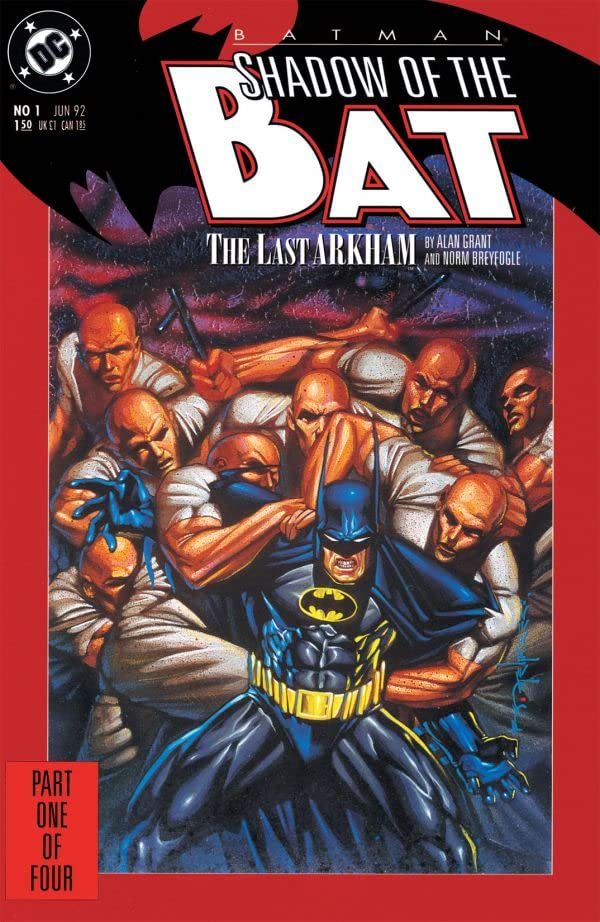
Three of the six on the founder's first-issues shelf.
The events shelf holds crossover events from both publishers: Crisis on Infinite Earths #1, #7 and #8, The Infinity War #1 and The Infinity Crusade #1. A third shelf gathers the books where much of the early-90s X-Men cast first shows up, from Cable in The New Mutants #87 to Gambit in Uncanny X-Men #266.
Ideas that work for any collection:
- The first comic you bought, and the next five you bought after it.
- Every book from one shop, one convention or one trip.
- Books you read until the spine went white, beside the copy you keep for the wall.
One book, every cover
A single issue with several covers can fill a shelf on its own. X-Men #1 from 1991 came with five covers: four that join into one image and a gatefold that opens out. Hung side by side, the four connecting covers make one picture, which no other kind of shelf can do.
The same works for any book with variants you own: every printing of a book you love, or every cover of a first issue. Log each variant separately in your collection so the wall can tell them apart.
Label each shelf
A short label turns a row of covers into a set a visitor can read. One line per shelf is enough: the story's name and its years, or the idea behind the row.
- "Fatal Attractions, 1993. All six chapters."
- "First issues, 1982 to 1992."
- "The Death of Superman, 1992 to 1993."
On a physical wall, a small printed card on the ledge or under the first frame does the job. On a digital wall, the shelf name sits above the row.
Favorites beat everything else
The books you love make a better wall than the books anyone tells you to want. A wall is a picture of a collector, and a shelf built from someone else's list of important issues tells a visitor nothing about you.
When two books compete for one slot, ask which one you would talk about if a friend pointed at it. Put that one up, and rotate the other in next time. A wall that changes a shelf every few months, as our guide to displaying comics at home suggests, gives every book its turn.
Build it once, change it often
Wall Comics is built around this kind of choosing. You bring in the list you already keep, from a collection app or a spreadsheet, and drag covers onto shelves. The rest of the collection stays in the app beside the wall, so swapping a book in is a drag, and the physical copies stay in their boxes.
Turn the wall on and other collectors in the beta can browse it, shelf by shelf. Comments and trade requests come next, so a gap in a story shelf can turn into a conversation with the collector who has the missing chapter.
Questions collectors ask
How many comics should go on a wall?
As many as you can choose with a reason, and few enough that each one was a decision. The founder's wall puts up about one book in 13. Pick a shelf length, six works well, and fill shelves with reasons until you run out of reasons.
What do I do about a missing chapter?
Leave its slot empty and keep the story in order around the gap. An empty slot in a story shelf shows a visitor exactly what you are looking for, which is how trades start.
How often should a wall change?
Change a shelf at a time, every few months. The wall stays fresh, and every book in the collection gets a turn. If you are just starting out, our guide to starting a comic collection covers how to build toward a first complete shelf.
Wall Comics is invite-only during the beta. Request an invite.