
There are three good ways to put comics on a wall at home: single frames, shallow ledges and mounts for graded slabs. Frames protect best, ledges make rotating easiest, and slab mounts suit books that are already sealed. Whichever you choose, plan the wall on paper with real measurements first, hang it out of direct light, and keep the rest of the collection in a digital wall people can browse.
Frames, ledges or slab mounts
Each method trades protection against how easily you can swap books. Pick by how often you want to change the wall.
| Method | Protection | Swapping a book | Best for |
|---|---|---|---|
| Single comic frame with UV-filtering glazing | Highest: closed, dust-free, filtered | Slow: open the back, swap, close | The books that stay up for months |
| Ledge or picture shelf, book bagged and boarded | Moderate: bag only, open to light and dust | Fast: lift one out, drop one in | Walls you rotate often |
| Slab mount or stand | High for the book, the slab is the case | Fast | Graded books |
Frames are the safest choice for a book that stays up a long time, since the glazing filters ultraviolet and keeps dust off the bag. Ledges are the quickest to rotate and let you change a whole row in a minute. A ledge needs a front lip tall enough to stop a boarded book sliding forward; check the lip height before you buy.
Measure before you drill
A wall plan starts with the size of the book and the size of what holds it. A current comic is about 6 5/8 inches wide and 10 3/16 inches tall, and a standard current backing board is 6 5/8 by 10 1/2 inches. Older books run wider: silver age boards are about 7 by 10 1/2 inches. A graded slab is larger again, about 8 3/8 by 13 1/8 inches to the outside of a typical slab bumper.
Frame sizes vary by maker, so measure the outside of the frame you are buying. For the plan below, take a frame that measures 9 by 13 inches outside.
The arithmetic is the whole plan: width of the row equals frames times frame width, plus gaps times gap width. We plan rows with equal gaps of 2 to 3 inches, which keeps the frames reading as one group. Cut paper templates to the frame size, tape them up, and live with them for a day before drilling.
How many frames fit across a wall, at 9-inch frames and 3-inch gaps:
| Wall width | Frames per row | Row width |
|---|---|---|
| 36 in | 3 | 33 in |
| 48 in | 4 | 45 in |
| 60 in | 5 | 57 in |
| 72 in | 6 | 69 in |
| 96 in | 8 | 93 in |
Rows stack the same way. Four rows of 13-inch frames with 3-inch gaps stand 61 inches tall, so a 6-by-4 grid of 24 frames needs a clear patch of wall about 69 by 61 inches, plus room around it.
Where to hang it
Galleries commonly hang work with its center about 57 inches from the floor, which puts it near eye level for most adults. For a grid, put the center of the whole group at that height, not the center of each frame.
The bigger decision is light. A wall that gets direct sun, even for an hour a day, will fade covers faster than anything else you do. Our guide to whether comics fade on display has the numbers; the short version is to hang on a wall that never sees the sun, light it with warm LEDs aimed at the wall, and keep the lights off when nobody is looking.
Arrange it by story
A wall reads best when each row has a reason. The founder's wall runs in shelves of six, and most shelves hold one story or one idea: the Death of Superman across four titles, Knightfall across Batman and Detective Comics, a shelf of first issues.
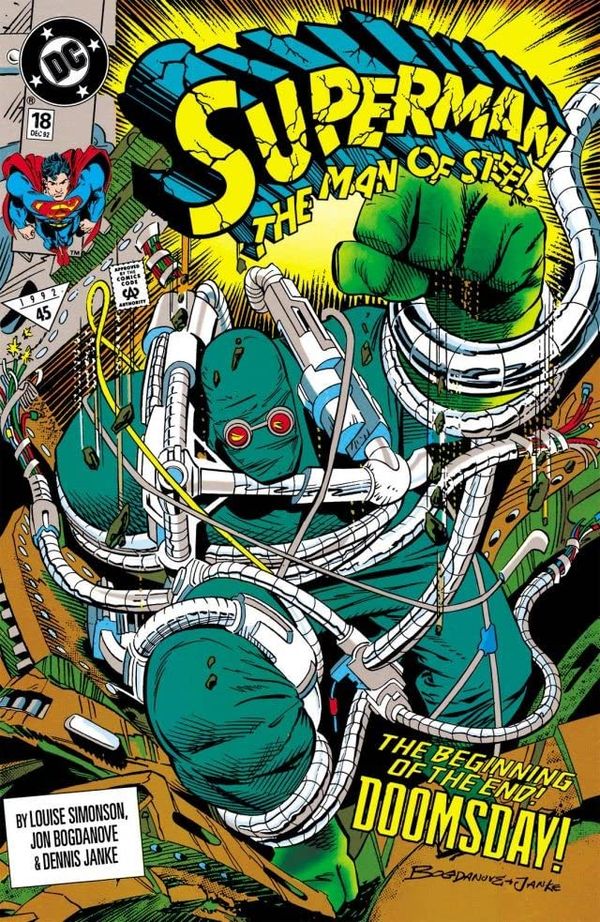


Three of the six on the founder's Death of Superman shelf, in story order.
Three arrangements that hold together:
- One story, in order. A crossover or a run, left to right, so the wall can be read.
- One look. All hologram covers, all one artist, all one year.
- One idea. First issues, books you bought the week they came out, books from the shop where you started.
Our guide to choosing which books to feature goes through the founder's shelves and how each row is grouped.
Rotate what hangs
A physical wall holds a few dozen books at most. Rotating them keeps the wall interesting and spreads light exposure across the collection, so no single cover takes all of it.
Ledges make rotation quick. With frames, rotate a row at a time on a set day, every three months for example. Keep a note of what went up and when, so nothing stays on the wall by accident for years.
The wall that holds everything
A physical wall shows the books you can fit. A digital wall shows the books you choose from all of them, to anyone, with the copies safe in their boxes.
Wall Comics is that digital wall. You bring in the list you already keep (from League of Comic Geeks, CLZ, ComicBase or a spreadsheet), put your best books on shelves, and turn the wall on so other collectors in the beta can browse it. It works alongside a physical display: hang a small rotated selection at home, and keep the full wall online.
Questions collectors ask
Can I hang comics without frames?
Yes, on a ledge or picture shelf with the book bagged and boarded. Hold the book by the bag and board, never by the comic itself: tape, pins and clips on the book leave marks that do not come out. A ledge needs a front lip tall enough to stop the boarded book sliding forward.
Should graded books go on the wall?
They can, with the same light rules as any other book. The slab protects against handling and dust, and its clear case lets light through, so a graded book on a bright wall fades like a raw one. Slab mounts and stands hold the case without touching the book.
Do I need UV-filtering glazing?
For any book that stays up for months, yes. UV filtering slows fading, and it does not stop the part caused by visible light, so the frame still needs a spot out of direct sun. Look for a stated UV blocking figure on the product, 97% or higher.
How do I keep a framed book from sliding inside the frame?
Frame it in its bag on a board cut to the frame's opening, so the board holds the book flat and the bag keeps it clean. Avoid adhesives anywhere near the book.
Wall Comics is invite-only during the beta. Request an invite.